C21 Canada

  • Home
  • About C21
    • Organizational Goal
    • Press Releases
    • Advisory Council
    • Secretariat
    • CEO Academy
    • CIO Alliance
    • Get Involved
    • Contact
  • Partners
  • Blog
    • C21 Canada Webinar Series: Future of AI in K12 Use Case Project Leadership Insights
    • C21 Canada Webinar Series: The Future of AI in K12 Education
    • C21 Canada 10th Anniversary Webinar Series
    • C21 Canada 2020/2021 School Year Podcast Series
  • Curation Space
    • CEO Academy Login
    • C21 Board Login
  • C21 Canada Publications
    • C21 CANADA AI TASKFORCE REPORT
    • The Future of AI in K12 Education Report
    • School Beyond COVID-19
    • C21 Canada Research
    • Resources
    • Parent Guide
    • Spiral Playbook
    • Shifting Minds
    • A COVID-19 LEADER PLAYBOOK FOR SURVIVING AND THRIVING
  • AI Use Cases
    • Spring 2025
    • Fall 2024

November 7, 2013 by admin

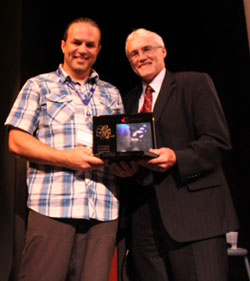
Peel DSB receives C21 Canada Shifting Minds National Award

IMG_5435[1]Congratulations to the Peel District School Board! Recipients of the C21 Canada Shifting Minds National Award for distinctive achievement in the field of 21st Century Learning and Innovation System Award category.

Pictured left to right: Robert Martellacci, MSL/C21 Canada; Tony Pontes, Director, Peel DSB; Mark Keating, CIO, Peel DSB and John Kershaw, president, C21 Canada

 

Filed Under: Blog

October 23, 2013 by admin

The OPSBA VISION FOR LEARNING

OPSBA

By John Kershaw, President of C21 Canada, and the former Deputy Minister of Education for New Brunswick

Today’s C21 Canada’s spotlight is on the Ontario Public School Board Association. And in this context C21 Canada celebrates OPSBA’s contribution to the 21st century learning movement in Canada with an enthusiastic high five!

The OPSBA released their inspiring new document Vision for Learning and Teaching in a Digital Age http://www.opsba.org/files/OPSBA_AVisionForLearning.pdf. The OPSBA document is a testament to progressive thinking and a welcome contribution to the call for 21st century models of learning in public education in Canada.  The fact that a key education leader in Canada’s largest province is actively engaging on the need for 21st century competencies and technology rich learning environments in public education can only be seen as positive to Canada’s 21st century learning movement.

The OPSBA’s new document is a call for change to position Ontario’s learners in the digital age. Rather than paraphrase the OPSBA latest document we highlight a few key passages that capture the essence of the OPSBA message on what must change.

Our Vision… requires a purposeful cultural shift in our education system that focuses on engaging and inspiring our students, that fosters creative and innovative minds and embraces the enabling role of technology on expanding how, when and where learning takes place.

The new role of education is to ensure all students have the opportunity to use their interests and passions to connect to all areas of knowledge.

The challenge for schools is to be open to adapting to and adopting the technology used by students. It represents a relevant way to empower students and engage them in taking responsibility for their own learning. It leads to building relationships in the classroom as the teacher engages with the students about the skills they bring, helps students refine those skills and encourages students to make productive and relevant use of technology in their everyday lives.

The document’s specific recommendations are high level and set the stage for real action on the path to transforming Ontario’s public education system to the reality of the knowledge and digital era.

The OPSBA vision statement is not just an important contribution to the future design of Ontario’s public education system; it is a complementary call for national action to C21 Canada’s own Shifting Minds vision and framework for change (see www.c21canada.org).

The authors are to be congratulated for a visionary document; the OPSBA is to be praised for endorsing and championing the vision; and the Ontario government will hopefully embrace the call for change on an urgent basis. The good news is that Ontario boasts many excellent examples of innovation in schools and in classrooms, and in a few instances at the district level itself. The challenge is to accelerate the pace of making these innovations systemic and transforming education to be innovative by design. Public education in Canada is rooted in the agrarian and industrial age and in today’s innovation driven society and economy we need an education system where innovation is celebrated, nurtured and rewarded.

A final word from the authors of the document: The challenge to be overcome is ensuring the readiness of our students to take their place in a world of rapid technological change and increased globalization. We need to start with an articulate Vision that will engage all our educators, all our learners, all our parents and all our communities.

Our collective and fervent wish is that one day soon the Ontario Ministry of Education and CMEC Ministers collectively issue a similar statement.

Filed Under: Blog, C21 News

October 21, 2013 by admin

What Should a Future School Look Like?

TVO-InterviewJohn Kershaw, president of C21 and former deputy minister of education in New Brunswick, discusses what future learning should look like, and where technology fits in with TVOparents.com.

Watch video here.

Filed Under: Blog

July 8, 2013 by admin

CMEC’s Recent Meeting in Iqaluit

By John Kershaw, President of C21 Canada and the former Deputy Minister of Education for New Brunswick.

By ADialla (Flickr: City of Iqaluit) [CC-BY-2.0 (http://creativecommons.org/licenses/by/2.0)], via Wikimedia Commons

On July 5th, 2013 Canada’s Ministers called for higher levels of innovation in public education.

C21 Canada welcomes this public call to action, issued in a communique from CMEC’s meeting in Iqaluit. CMEC (Council of Ministers of Education Canada) is the forum where provincial and territorial Ministers of education convene to collaborate on pan Canadian initiatives and share best practices. In Canada, education is constitutionally a provincial jurisdiction, and as such there is no federal department of education. This means that CMEC is the only Canadian entity where a “national”vision and policy framework for public education can be formed and shared with the public. Thus, when Minister’s call for more innovation in education, they are in fact calling on themselves to act.

What leadership actions could the Ministers of education pursue? C21 Canada offers the following five steps for immediate action by CMEC:

  1.  CMEC should move quickly to amend its current policy statement on public education (Learn Canada 2020) to reflect a vision statement and policy framework for 21st century models of learning for Canada’s public education systems. The revised document should include a call for all provinces and territories to adopt 21st century models of learning in public education.C21 Canada’s “Shifting Minds” is a 21st century inspired vision and framework for public education in Canada and is focused on creating innovative learning environments in Canada’s classrooms.
  2. CMEC should directly engage the public by commissioning a national Roundtable mandated to identify how to accelerate the pace of provinces and territories adopting and effectively implementing 21st century models of learning.
  3. CMEC should lead the creation of new “national” school administration and teacher training guidelines for adoption by provinces and territories,  founded on the principles of 21st century learning and innovation.
  4. CMEC should call on the federal government to ensure its proposed new Federal Aboriginal Education Act is founded on the principles of 21st century learning and innovation. (The federal government does have the constitutional responsibility for aboriginal learners).
  5. CMEC should set provincial and territorial targets for enhanced levels of investments in digital learning environments, tools and resources for Canada’s learners and teachers. CMEC should also collaborate with the federal government on the creation of a new national Canadian Learner Technology Program designed to ensure high level connectivity to “all” Canadian schools and technology-rich learning environments for all of Canada’s learners. In the digital age, technology enabled learning must become the norm, and all learners and teachers provided access to state of the art digital tools, resources and related instructional practices.

C21 Canada supports the recent CMEC Ministers call for more innovation in public education. Now it is time for CMEC to act on its own call to action, and provide the pan Canadian leadership for public education they inherited from Canada’s constitution.


Filed Under: Blog

June 17, 2013 by admin

Chris Whittaker Receives Shifting Minds Award


Chris Whittaker is presented the Shifting Minds Award by John Kershaw
Chris Whittaker is presented the Shifting Minds Award by John Kershaw 

On June 11, 2013 C21 Canada presented Chris Whittaker of Dawson College with a Shifting Minds National Award for distinctive achievement in the field of 21st Century learning and innovation. C21 Canada’s Shifting Minds awards are presented to recognize the work of individuals and organizations in advancing 21st century models of learning in Canada consistent with C21 Canada’s vision and framework document, Shifting Minds (see wwww.c21canada.org).   In presenting the award, C21 Canada’s President John Kershaw highlighted Chris Whittaker’s accomplishments in advancing 21st century models of learning and teaching in the field of physics, through the pursuit of creative and student-centred pedagogies and the design of innovative learning environments. The award was presented at the SALTISE conference at Dawson College, in front of a number of Chris Whittaker’s colleagues and peers.

Chris has been a physics teacher at Dawson College for over 15 years. According to his colleagues, what makes Chris special are 4 distinctive qualities:

  • His ongoing efforts to improve his students’ learning.
  • His continuing commitment to improving his teaching practice.
  • His commitment to advance the field of physics education through research and innovation.
  • His mentoring activities related to his colleagues.

The focus of Chris’s teaching is the creation of appropriate learning activities and environments.  He designs activities to engage students from both a conceptual and problem solving perspective. He develops learning activities that keep the individual student in mind while leveraging the benefits of collaborative engagement of peers. He leaves room for his students to have fun and see the beauty in learning physics. His students say that by sharing his many personal experiences he makes his teaching meaningful to them while also making him more approachable.

Perhaps the most important testimonials come from Chris’s students:

  • Chris cares that you do well as an individual. That you do well and succeed for yourself. He wants you to improve. It’s… the best feeling [for a student].
  •  Chris cares whether I pass or fail … He wants us to succeed as students. He doesn’t do all these examples in different ways and use all this technology… just for fun… I mean it is fun, but he does it so we can learn better, learn more and that’s great!
  • I think Chris reinforces critical thinking. With the way he does problems and all the examples he shows. I think he wants you to actually think and figure out what is going on which is why I think we do a lot of the examples without actual numbers.
  •  Chris just goes home and [seems to] spend his time trying to improve stuff that we didn’t understand. … That makes you want to learn.

Chris has played a major leadership role in designing two Active Learning Classrooms that integrate technology with teaching and learning.  A major consequence of his work has been to support his colleagues’ in engaging the Active learning Classroom model. In the process of doing so, Chris has been instrumental in creating a vibrant and growing community of practice among teachers who teach in these student centred and technology rich learning environments.

Chris’ reputation of being an exceptional teacher and innovator has spread beyond Quebec. Last summer he was asked to present his Active Learning Classroom initiative to students at the University of British Columbia. This fall he was recruited to prepare a series of workshops for the Engineering Faculty at McGill University who are promoting the use of active learning among their faculty members.

Chris Whittaker is clearly an innovator, a leader and a collaborator, three traits that have earned him recognition by others, and ones that C21 Canada also wished to acknowledge. C21 Canada is honoured to recognize a true leader and innovator in the field of education.


Filed Under: Blog, C21 News, Uncategorized

  • « Previous Page
  • 1
  • …
  • 20
  • 21
  • 22
  • 23
  • 24
  • …
  • 28
  • Next Page »

Profile

C21 Canada and its members provide collaborative vision and support to help Canadian education organizations enhance learning in the foundation areas of literacy, numeracy and science while infusing 21st Century skills (creative problem solving, critical thinking, collaboration, communication, personal development, global citizenship and digital competency) into content, and instructional and assessment practices.

Creative Commons

Creative Commons License

This work is licensed under a Creative Commons Attribution 4.0 International License.

Stay Connected

Search

Copyright © 2026 — C21 Canada • All rights reserved.