C21 Canada

  • Home
  • About C21
    • Organizational Goal
    • Press Releases
    • Advisory Council
    • Secretariat
    • CEO Academy
    • CIO Alliance
    • Get Involved
    • Contact
  • Partners
  • Blog
    • C21 Canada Webinar Series: Future of AI in K12 Use Case Project Leadership Insights
    • C21 Canada Webinar Series: The Future of AI in K12 Education
    • C21 Canada 10th Anniversary Webinar Series
    • C21 Canada 2020/2021 School Year Podcast Series
  • Curation Space
    • CEO Academy Login
    • C21 Board Login
  • C21 Canada Publications
    • C21 CANADA AI TASKFORCE REPORT
    • The Future of AI in K12 Education Report
    • School Beyond COVID-19
    • C21 Canada Research
    • Resources
    • Parent Guide
    • Spiral Playbook
    • Shifting Minds
    • A COVID-19 LEADER PLAYBOOK FOR SURVIVING AND THRIVING
  • AI Use Cases
    • Spring 2025
    • Fall 2024

April 1, 2014 by admin

New Ontario Study Calls for Provincial Digital Learning Strategies

Is the Digital Divide Impacting the Skills and Employment Gap Amongst Our Youth?

By Robert Martellacci, Co-founder and Vice-president, C21 Canada

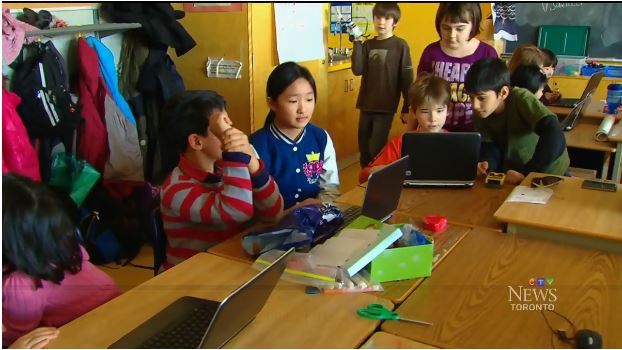
It was a fascinating opportunity to participate in the People for Education: Digital Learning in Ontario Schools – The New Normal news conference yesterday at Queen Elizabeth P.S. in the TDSB. One of the highlights of the morning was observing grade 4 students highly engaged in small teams collaborating with technology; blogging, creating websites and programming Lego Robotics. This is the “New Normal.”

CTVsnap

The challenge facing schools in Ontario is scaling Mr. Kiel’s grade 4 class beyond the pilot mode and into the mainstream classroom, thus getting beyond pockets of innovation. While the study acknowledges greater access to technology and free digital resources, Ontario has yet to announce its long awaited digital strategy framework which may be in part due to the rumoured provincial election.  In the meantime, school districts face the challenge of addressing the equity issue around technology access for students and teachers. BYOD (Bring Your Own Device) policies should help address this, however, a clear and concise vision from the Ontario Ministry of Education backed up with the infusion of funding will be most welcomed by parents, students and teachers alike.  Industry also has a role to play in forging strategic partnerships with education when it comes to providing cost-effective and appropriate digital resources and tools.

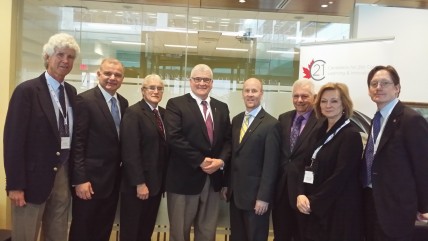
IMG_9399
(Left to Right) Robert Martellacci, Vice-president & Co-Founder C21 Canada, Annie Kidder, Executive Director, People for Education, Kelly Gallagher-Mackay, Research Director, People for Education

Kudos to People for Education for illuminating the “New Normal” in public education in Ontario. Innovation is no longer an option in preparing Ontario’s learners and future leaders for the 21st century global digital world. The education ecosystem needs to be nurtured by all to stakeholders to level the playing field with technology enhanced learning in order for Ontario to be a global leader and strive for excellence. It takes a connected digital village to raise a child in the 21st century.

Filed Under: Blog, Member News, Uncategorized

March 31, 2014 by admin

Policy Lagging Behind Practice in the Digital Age

Toronto (March 31, 2014) – A new report from People for Education shows that nearly every school in the province is “wired” and the vast majority of students start using computers in kindergarten.

But the report raises concerns about a lack of provincial policy to ensure that teachers have the training they need to use technology effectively and to ensure that all students are being provided with high quality learning resources.

Read more


Filed Under: C21 News

March 26, 2014 by admin

Karen Yamada from Winnipeg MB was Recently Awarded C21 Canada’s Ambassador Medallion

Winnipeg-20130604-00175


Karen Yamada from Winnipeg MB was recently awarded  C21 Canada’s Ambassador Medallion for her work and commitment nationally to 21st century learning and innovation. This Medallion was presented on C21 Canada’s behalf by Gerald Farthing, Deputy Minister of Education and Advanced Learning, MB.

Karen joins C21 Canada’s 2 other Ambassadors:  Hon. Paul Martin and John Abele, Boston Scientific.

Filed Under: Uncategorized

March 20, 2014 by admin

Ontario Highlights Education as Foundation of Future Economic Success

On March 18th, 2014 Ontario’s Premier Kathleen Wynne convened over 200 education and business leaders in Toronto to discuss the topic Talent and Skills in the New Economy. Interested readers can find commentary at #ONjobs.

The focus of the event was clearly post secondary education, with most participants hailing from Ontario’s university and college systems. A limited number of business leaders were also present, largely as part of the three panels.

While the keynotes and panels varied in focus, the central theme was how best to position Ontario in the 21st century knowledge economy. Premier Wynn’s speech was the event highlight, and her passion for education as the vehicle to reposition Ontario as the economic power in Canada was clearly evident. The Honourable Brad Duguid, Minister of Training, Colleges and Universities, shared the Premier’s passion and assuming the current government remains in power, Ontario’s focus on and investments in education will likely continue at a brisk pace.

Notwithstanding the post secondary focus, the majority of speakers highlighted the fact that the K-12 system in Ontario was an essential element to future success. In this context, perhaps it was unfortunate that the K-12 system was not more in evidence at the event. Although the Honourable Liz Sandals, Minister of education for Ontario was in attendance for a short time, the event was clearly a post secondary show. Fortunately, a number of speakers highlighted the fact that as a feeder system to the post secondary system, nurturing of the talents and skills required in the new economy must start in the early grades.  Premier Wynn acknowledged these observations when she noted that it is far too late to start talking about innovation at Grade 12.

According to public education officials, Ontario’s eagerly awaited vision statement (strategy) on its K-12 public education system is near completion. If Minister Sandals’ ongoing public statements are any indication, Ontario will soon join Alberta and British Columbia with a public commitment to a 21st century model of learning. However, this is not to say that Ontario is trailing these other two provinces in transforming its system. Large investments have already been made by the province in prototyping and evaluating what the changes would look like in advance of a public and systemic call for change. The outcomes of these investments will hopefully be released in a report in early spring.

If all speakers at Premier Wynn’s event had one thing in common it was recognition that if Ontario was to position itself for success in the global knowledge economy, unified action is required. Premier Wynn committed to reconvene the participants in three months time to continue the dialogue. Hopefully the next event will allow for more active engagement by participants in identifying the way forward. There was a lot of talent in the room, with many participants eager to contribute to building the strategy and framework to match Premier Wynn’s vision.  We would also encourage the organizers to bring together representatives from both Ontario’s K-12 and PSE communities, as both are as essential as the other in moving a 21st century learning agenda forward.

It is also clear that a growing number of provinces are actively pursuing learning and skills strategies rooted in the vision and principles of the global 21st century learning movement.  C21 Canada continues to call on CMEC Ministers to show national leadership and issue a vision statement calling on all provincial and territorial jurisdictions to modernize their public education systems consistent with the 21st century learning model. We recognize that provinces and territories will find their own way forward on this path, but it would help if Canadians were told that CMEC Ministers shared a vision for the future.  It would also serve to support those provinces and territories brave enough to move forward, and encourage the others to move in the same direction.

As noted at the event by Pat Horgan, Vice President of Manufacturing, Development and Operations for IBM Canada, we can all decide to work collaboratively, or all be outcompeted in the global marketplace.


Filed Under: Blog

March 11, 2014 by admin

21st Century Learning in the Media

The 21st century learning debate has finally gone public in Canada.

In one corner we have those Canadians who question whether our nation should stick to the 19th century inspired “industrial model” of learning. Hats off to Margaret Wente for articulating this point of view.  Wente’s article, published in the Globe and Mail March 4th 2014 likely reflects many Canadian’s concerns with what she calls the “the faddish, fuzzy notion called “21st Century Learning.”

Meanwhile, in Alberta, the Minister of Education, the Honourable Jeff Johnson, is championing what he calls “an informed transformation” of that province’s education system to a “21st century model of learning”.  Entitled “Inspiring Education”, the Alberta learning agenda embraces the principles of the 21st century learning movement. In an article published March 5th 2014 in the Calgary Herald Minister Johnson highlights the rationale for the changes and points out the fallacies of those suggesting Alberta is risking their “international success status” in student performance.

We applaud both Wente and Johnson for taking on this important debate. Of course, as an organization whose mandate is to advocate for 21st century models of learning through-out Canada, C21 Canada is clearly on Johnson’s side of the argument. However, we welcome Canadians engagement on the fundamentally important question of the future of education in Canada.

The critical question Canadians must ask themselves is: “Will the industrial model of learning, developed in the 19th century, continue to serve young Canadians and the country, or do we need to modernize our model of learning to reflect 21st century realities?”

The second question we must ask is: “Is 21st century learning really a “faddish, fuzzy notion?” In 2012, C21 Canada released “Shifting Minds: A 21st Century Vision of Public Education for Canada”. Shifting Minds is founded on a vast array of both national and international research and offers a vision and framework for Canadians to understand “why” a 21st century learning model is needed in today’s knowledge and digital era,  “what” constitutes a 21st century learning model, and “how” to make the changes required. The OECD, UNESCO, European Union and Partnership for 21st Century Skills in the United States are just some of the international organizations calling for countries to modernize their learning systems. And many jurisdictions are responding, including some of the top PISA performing countries in the world. A growing number of thought leaders around the world are joining the call for change and much has been written on what has been coined the global 21st century learning movement.  Interestingly, within this growing body of knowledge, there is a high convergence of thinking around what must be done to position today’s youth for success in “their” future. To suggest that the 21st century learning is a fuzzy, faddish notion is an injustice to the global research and evidence behind the principles and concepts.

If Wente and others are to continue to be the voice of maintaining the 19th century industrial model of learning in the 21st century in this country, we encourage all Canadians to become more informed of what this would really mean for our youth, and for Canada as a whole. If you believe the world around you has changed remarkably in the 21st century with the advancements of new technologies and access to the world’s body of knowledge, you may begin to wonder why our education systems should remain the same.

On February 19th, 2014 C21 Canada presented Minister Jeff Johnson with a Shifting Minds Award to recognize his work in advancing a 21st century model of learning in Alberta. While C21 Canada will likely never present Margaret Wente with a Shifting Minds Award, we appreciate her contribution to the debate on whether education in Canada needs to be modernized. In our view, this debate needs to be public, and is the most important topic Canadians should be engaged on at this time.

Filed Under: Blog

  • « Previous Page
  • 1
  • …
  • 29
  • 30
  • 31
  • 32
  • 33
  • …
  • 42
  • Next Page »

Profile

C21 Canada and its members provide collaborative vision and support to help Canadian education organizations enhance learning in the foundation areas of literacy, numeracy and science while infusing 21st Century skills (creative problem solving, critical thinking, collaboration, communication, personal development, global citizenship and digital competency) into content, and instructional and assessment practices.

Creative Commons

Creative Commons License

This work is licensed under a Creative Commons Attribution 4.0 International License.

Stay Connected

Search

Copyright © 2026 — C21 Canada • All rights reserved.