C21 Canada

  • Home
  • About C21
    • Organizational Goal
    • Press Releases
    • Advisory Council
    • Secretariat
    • CEO Academy
    • CIO Alliance
    • Get Involved
    • Contact
  • Partners
  • Blog
    • C21 Canada Webinar Series: Future of AI in K12 Use Case Project Leadership Insights
    • C21 Canada Webinar Series: The Future of AI in K12 Education
    • C21 Canada 10th Anniversary Webinar Series
    • C21 Canada 2020/2021 School Year Podcast Series
  • Curation Space
    • CEO Academy Login
    • C21 Board Login
  • C21 Canada Publications
    • C21 CANADA AI TASKFORCE REPORT
    • The Future of AI in K12 Education Report
    • School Beyond COVID-19
    • C21 Canada Research
    • Resources
    • Parent Guide
    • Spiral Playbook
    • Shifting Minds
    • A COVID-19 LEADER PLAYBOOK FOR SURVIVING AND THRIVING
  • AI Use Cases
    • Spring 2025
    • Fall 2024

October 23, 2013 by admin

The OPSBA VISION FOR LEARNING

OPSBA

By John Kershaw, President of C21 Canada, and the former Deputy Minister of Education for New Brunswick

Today’s C21 Canada’s spotlight is on the Ontario Public School Board Association. And in this context C21 Canada celebrates OPSBA’s contribution to the 21st century learning movement in Canada with an enthusiastic high five!

The OPSBA released their inspiring new document Vision for Learning and Teaching in a Digital Age http://www.opsba.org/files/OPSBA_AVisionForLearning.pdf. The OPSBA document is a testament to progressive thinking and a welcome contribution to the call for 21st century models of learning in public education in Canada.  The fact that a key education leader in Canada’s largest province is actively engaging on the need for 21st century competencies and technology rich learning environments in public education can only be seen as positive to Canada’s 21st century learning movement.

The OPSBA’s new document is a call for change to position Ontario’s learners in the digital age. Rather than paraphrase the OPSBA latest document we highlight a few key passages that capture the essence of the OPSBA message on what must change.

Our Vision… requires a purposeful cultural shift in our education system that focuses on engaging and inspiring our students, that fosters creative and innovative minds and embraces the enabling role of technology on expanding how, when and where learning takes place.

The new role of education is to ensure all students have the opportunity to use their interests and passions to connect to all areas of knowledge.

The challenge for schools is to be open to adapting to and adopting the technology used by students. It represents a relevant way to empower students and engage them in taking responsibility for their own learning. It leads to building relationships in the classroom as the teacher engages with the students about the skills they bring, helps students refine those skills and encourages students to make productive and relevant use of technology in their everyday lives.

The document’s specific recommendations are high level and set the stage for real action on the path to transforming Ontario’s public education system to the reality of the knowledge and digital era.

The OPSBA vision statement is not just an important contribution to the future design of Ontario’s public education system; it is a complementary call for national action to C21 Canada’s own Shifting Minds vision and framework for change (see www.c21canada.org).

The authors are to be congratulated for a visionary document; the OPSBA is to be praised for endorsing and championing the vision; and the Ontario government will hopefully embrace the call for change on an urgent basis. The good news is that Ontario boasts many excellent examples of innovation in schools and in classrooms, and in a few instances at the district level itself. The challenge is to accelerate the pace of making these innovations systemic and transforming education to be innovative by design. Public education in Canada is rooted in the agrarian and industrial age and in today’s innovation driven society and economy we need an education system where innovation is celebrated, nurtured and rewarded.

A final word from the authors of the document: The challenge to be overcome is ensuring the readiness of our students to take their place in a world of rapid technological change and increased globalization. We need to start with an articulate Vision that will engage all our educators, all our learners, all our parents and all our communities.

Our collective and fervent wish is that one day soon the Ontario Ministry of Education and CMEC Ministers collectively issue a similar statement.


Filed Under: Blog, C21 News

October 8, 2013 by admin

C21 Canada Comments on International PIAAC Report

C21 Logo small

 Toronto, Ontario CANADA, Tuesday, October 8, 2013: Today’s release of an international survey on adult competencies in the 21st century is a wake-up call for Canadians.  Although Canada scored well relative to many participating countries, Canada is not in the top group of performing nations.

The Programme for the International Assessment of Adult Competencies (PIAAC) was conducted by the OECD and focused on three primary areas of adult competency (ages 16 to 65): literacy, numeracy and digital literacy. The specific findings can be found on the website of the Council of Ministers of Education Canada (CMEC) at http://www.cmec.ca/. CMEC is comprised of Ministers responsible for learning, skills and labour development and provinces are the constitutional lead for education in Canada.

The Honourable Jeff Johnson, Minister of Alberta Education inherited the Chair of CMEC a mere week ago. In a meeting today with education and industry stakeholders he listened carefully to the opportunities and challenges identified as a result of the PIAAC findings. “He is clearly a leader who is focused on moving the 21st century learning agenda ahead in Canada, in partnership and collaboration with all stakeholders.” says John Kershaw, President, C21 Canada.  The fact that C21 Canada was invited to a special briefing session with Minister on the PIAAC findings speaks well to his interest in reaching out to groups and organizations who are actively engaged in and supportive of the call for changes in Canada’s learning systems.

Although the real work of deciphering the data from the OECD survey now begins, the key messages C21 Canada takes away from the PIAAC findings and the Ministers briefing session this morning include:

1)     Although Canada’s ranking is relatively positive, we have much work to do to position Canadians with the competencies they need for success in the 21st century;

2)     Canada is not in the top group of performing nations, and there is wide regional variation in performance across the country.

3)     There is a direct link between highly skilled people with 21st competencies and future economic prosperity and social progress;

4)     CMEC and Minister Johnson are committed to leading a national discussion on how to ensure Canadians achieve the competencies they need for success and will be model collaborators in this process;

5)     OECD’s PISA results, to be released December, will continue to fuel the national discussion on learning and skills development;

6)     The call for change is emanating from many quarters, both internationally (OECD) and nationally (Equinox Summit in Waterloo http://wgsi.org/).

C21 Canada advised Minister Johnson and CMEC officials that our organization is committed to supporting their efforts to convene educators, business leaders and other societal stakeholders and promote a national dialogue on the need for 21st century models of learning and skills development in Canada.

About C21 Canada
C21 Canada is a unique blend of national education associations and knowledge sector businesses united in their belief that 21st century models of learning must be adopted in public education on an

urgent basis to position Canadians for economic, social and personal success in the high skills, knowledge and innovation based economy.www.c21canada.org


C21 Canada Founding Members
: Canadian Education Association, Calgary Board of Education, Canadian School Boards Association, Dell, EF Educational Tours, IBM, Microsoft, Nelson Education, Oxford University Press, Pearson, Scholastic Education, SMART Technologies.

Secretariat: 21st Century Learning Associates, MindShare Learning

For media inquiries, please contact:

John Kershaw, President, C21 Canada
Phone: (506) 470-4985
E-mail: John.Kershaw@c21canada.org
Website: www.c21canada.org

Robert Martellacci, Vice-President, C21 Canada
Phone: (416) 569-2106
E-mail: Robert.Martellacci@c21canada.org
Website: www.c21canada.org


Filed Under: C21 News, Press Release, Uncategorized

September 12, 2013 by admin

C21 Welcomes New Member and Sponsor

As a part of the C21 mission to expand its national network we are pleased to announce our newest board member Naomi Johnson, Calgary Board of Education’s Chief Superintendent of Schools.

We would like to thank Warren Jestin, Senior Vice-President & Chief Economist at Scotiabank, for generously sponsoring and supporting C21 Canada.

NoamiJohnsonSmaller WarrenJestin

From left to right: Naomi Johnson, Calgary Board of Education’s Chief Superintendent of Schools
Warren Jestin, Senior Vice-President & Chief Economist at Scotiabank


Filed Under: C21 News, Uncategorized

June 17, 2013 by admin

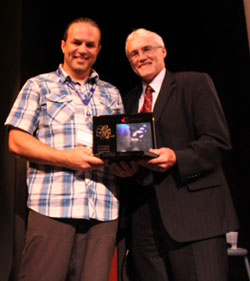
Chris Whittaker Receives Shifting Minds Award


Chris Whittaker is presented the Shifting Minds Award by John Kershaw
Chris Whittaker is presented the Shifting Minds Award by John Kershaw 

On June 11, 2013 C21 Canada presented Chris Whittaker of Dawson College with a Shifting Minds National Award for distinctive achievement in the field of 21st Century learning and innovation. C21 Canada’s Shifting Minds awards are presented to recognize the work of individuals and organizations in advancing 21st century models of learning in Canada consistent with C21 Canada’s vision and framework document, Shifting Minds (see wwww.c21canada.org).   In presenting the award, C21 Canada’s President John Kershaw highlighted Chris Whittaker’s accomplishments in advancing 21st century models of learning and teaching in the field of physics, through the pursuit of creative and student-centred pedagogies and the design of innovative learning environments. The award was presented at the SALTISE conference at Dawson College, in front of a number of Chris Whittaker’s colleagues and peers.

Chris has been a physics teacher at Dawson College for over 15 years. According to his colleagues, what makes Chris special are 4 distinctive qualities:

  • His ongoing efforts to improve his students’ learning.
  • His continuing commitment to improving his teaching practice.
  • His commitment to advance the field of physics education through research and innovation.
  • His mentoring activities related to his colleagues.

The focus of Chris’s teaching is the creation of appropriate learning activities and environments.  He designs activities to engage students from both a conceptual and problem solving perspective. He develops learning activities that keep the individual student in mind while leveraging the benefits of collaborative engagement of peers. He leaves room for his students to have fun and see the beauty in learning physics. His students say that by sharing his many personal experiences he makes his teaching meaningful to them while also making him more approachable.

Perhaps the most important testimonials come from Chris’s students:

  • Chris cares that you do well as an individual. That you do well and succeed for yourself. He wants you to improve. It’s… the best feeling [for a student].
  •  Chris cares whether I pass or fail … He wants us to succeed as students. He doesn’t do all these examples in different ways and use all this technology… just for fun… I mean it is fun, but he does it so we can learn better, learn more and that’s great!
  • I think Chris reinforces critical thinking. With the way he does problems and all the examples he shows. I think he wants you to actually think and figure out what is going on which is why I think we do a lot of the examples without actual numbers.
  •  Chris just goes home and [seems to] spend his time trying to improve stuff that we didn’t understand. … That makes you want to learn.

Chris has played a major leadership role in designing two Active Learning Classrooms that integrate technology with teaching and learning.  A major consequence of his work has been to support his colleagues’ in engaging the Active learning Classroom model. In the process of doing so, Chris has been instrumental in creating a vibrant and growing community of practice among teachers who teach in these student centred and technology rich learning environments.

Chris’ reputation of being an exceptional teacher and innovator has spread beyond Quebec. Last summer he was asked to present his Active Learning Classroom initiative to students at the University of British Columbia. This fall he was recruited to prepare a series of workshops for the Engineering Faculty at McGill University who are promoting the use of active learning among their faculty members.

Chris Whittaker is clearly an innovator, a leader and a collaborator, three traits that have earned him recognition by others, and ones that C21 Canada also wished to acknowledge. C21 Canada is honoured to recognize a true leader and innovator in the field of education.


Filed Under: Blog, C21 News, Uncategorized

June 5, 2013 by admin

Advocates for 21st Century models of learning in Canada are offered three significant trends of interest

David Roberts, Karen Yamada, & John Kershaw
at CONNECT 2013

By John Kershaw, President of C21 Canada, President of 21st Century Learning Associates, and the former Deputy Minister of Education for New Brunswick

When hosting a booth at the recent CONNECT conference in Niagara (May 6/7) C21 Canada was encouraged by the number of education leaders who advised us they are using our Shifting Minds strategy to guide their strategic planning efforts. The Peel County School Board and Mohawk College are two examples of those who are using C21 Canada’s vision and framework in their  own planning efforts. As this trend continues C21 Canada wishes to hear from those educators who use Shifting Minds to guide their planning efforts. Contact us via our website and share your Shifting Minds stories.

The Skills Gap issue in Canada is gaining national profile, with numerous business and education groups highlighting the need for both short and long term remedies. Cited in some instances as “the  21st Century skills race” the global scope of the skills challenge is to ensure Canadians share in the wealth creation and employment opportunities arising from the knowledge and digital era.  The Canadian Chambers of Commerce’s document entitled the Top Ten Barriers to Competitiveness is a case in point. The Canadian Council of Chief Executives is also showing leadership in this area, convening a recent forum on the role of public education in addressing the issue. C21 Canada is actively engaging these organizations in recognition of the direct relationship between the skills gap issue and the 21st century learning movement. Education and business leaders across Canada need to better communicate and coordinate their respective efforts on these two inter-related fronts.

A potential bright light on the Canadian 21st Century learning horizon is  Alberta Education assuming the Chair of CMEC in the fall. Alberta is a leader in transforming its education system to the 21st century reality.  C21 Canada is hopeful that the Honourable Jeff Johnson, Alberta’s Minister of Education, and his newly appointed Deputy Minister, Greg Bass, will lead CMEC into infusing a  21st Century learning vision and into its pan Canadian education strategy, Learn Canada 2020. In the absence of a federal education agency, CMEC must seize the “national” leadership mantle and signal its support for the 21st century learning movement as the single most priority for all Canadian learners, and Canadian society as a whole.

Filed Under: Blog, C21 News

  • « Previous Page
  • 1
  • …
  • 12
  • 13
  • 14
  • 15
  • Next Page »

Profile

C21 Canada and its members provide collaborative vision and support to help Canadian education organizations enhance learning in the foundation areas of literacy, numeracy and science while infusing 21st Century skills (creative problem solving, critical thinking, collaboration, communication, personal development, global citizenship and digital competency) into content, and instructional and assessment practices.

Creative Commons

Creative Commons License

This work is licensed under a Creative Commons Attribution 4.0 International License.

Stay Connected

Search

Copyright © 2026 — C21 Canada • All rights reserved.